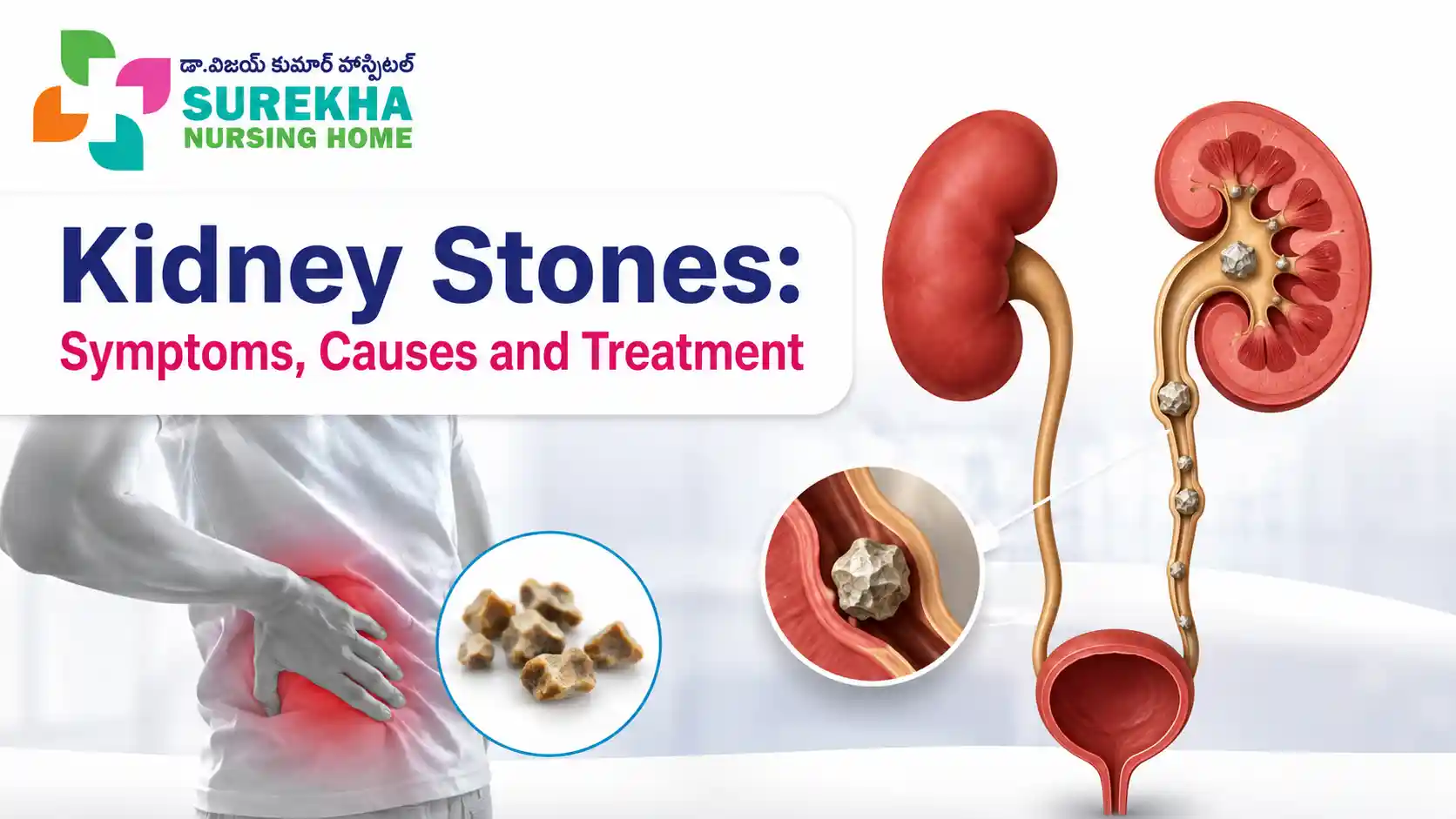
If you have questions about kidney stones: symptoms, causes and treatment, this guide breaks it down in simple terms, so you know exactly what to expect and when to seek care. Kidney stones are hard deposits formed from minerals and salts that crystallise inside the kidneys. They are a common urological problem that can range from causing no symptoms at all to severe, debilitating pain.
Read Also : Seasonal Flu and Viral Fever: When to Consult a Doctor
Key Symptoms, Causes & Details
The classic symptom of kidney stones is sudden, severe pain in the back or side, often radiating to the lower abdomen and groin, known as renal colic. Other symptoms include blood in urine, nausea, vomiting, frequent urination, and pain during urination. Some smaller stones may pass without significant symptoms, while larger stones can cause urinary blockage.
Diagnosis & Treatment at Surekha Nursing Home
Common causes include inadequate water intake, high salt or protein diets, obesity, certain medical conditions, and family history. Dehydration is one of the most significant contributing factors, making adequate fluid intake essential for prevention.
When Should You Consult a Doctor
At Surekha Nursing Home, our urology department evaluates kidney stones using ultrasound and, when needed, CT imaging through our radiology services, combined with urine and blood tests from our pathology lab. Treatment depends on stone size and location — smaller stones may pass naturally with increased fluid intake and pain management, while larger stones may require medical procedures to break down or remove them.
Why Choose Surekha Nursing Home, Korutla
Prevention focuses on staying well-hydrated, moderating salt and animal protein intake, and addressing any underlying metabolic conditions. Patients with a history of kidney stones should have regular follow-ups, as recurrence is common without proper preventive measures.
Conclusion
Understanding kidney stones: symptoms, causes and treatment helps you make informed decisions about your health. At Surekha Nursing Home, Korutla’s most trusted multispeciality hospital since 1997, our experienced doctors and in-house diagnostic facilities ensure you get accurate answers and the right care, close to home. Book an appointment today by calling +91 79010 89108 or visiting snhkorutla.in.
FAQs
- Q: How much water should I drink to prevent kidney stones? A: At least 2.5-3 litres daily is generally recommended, more in hot weather or with physical activity.
- Q: Can kidney stones pass on their own? A: Small stones (under 5mm) often pass naturally with increased fluids and pain management.
- Q: What foods increase the risk of kidney stones? A: High-salt, high-oxalate foods (like excessive spinach) and high animal protein diets can increase risk.
- Q: Is surgery always needed for kidney stones? A: No, many stones pass naturally; surgery or procedures are needed only for larger or blocking stones.