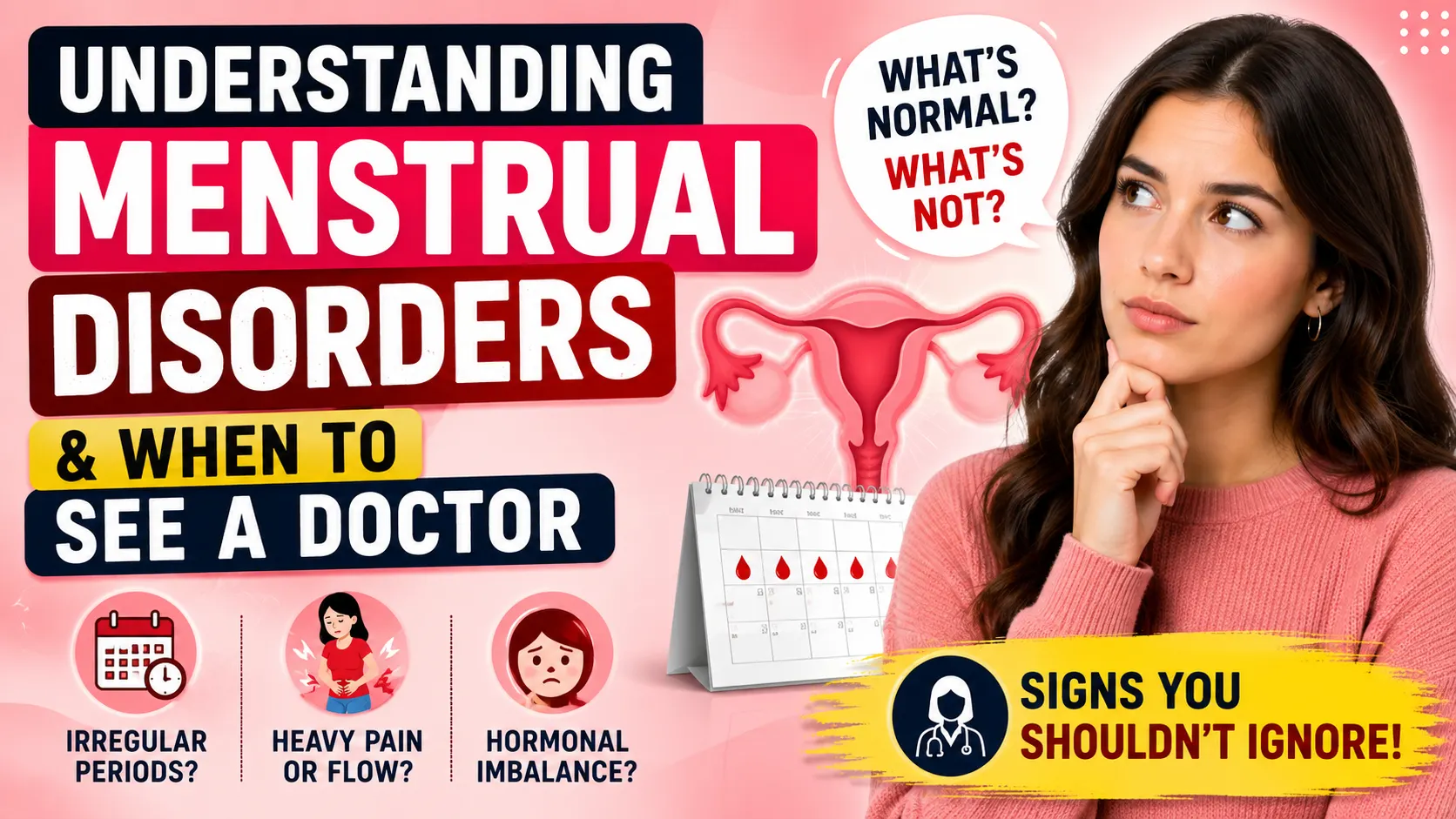
If you have questions about understanding menstrual disorders and when to see a doctor, this guide breaks it down in simple terms, so you know exactly what to expect and when to seek care. Menstrual irregularities are a common concern among women of all ages, but persistent problems should never be ignored. Understanding what is normal versus what requires medical attention can help women maintain better reproductive health.
Key Symptoms, Causes & Details
Common menstrual disorders include heavy or prolonged bleeding (menorrhagia), painful periods (dysmenorrhea), irregular cycles, and absent periods (amenorrhea). These conditions can result from hormonal imbalances, PCOS, thyroid disorders, fibroids, endometriosis, or stress. In some cases, they may also signal underlying conditions that need timely diagnosis and treatment.
Diagnosis & Treatment at Surekha Nursing Home
At Surekha Nursing Home, our gynaecology team conducts a detailed evaluation including a physical examination, ultrasound, and hormone testing to identify the root cause of menstrual irregularities. Treatment options range from lifestyle changes and hormonal medications to more advanced interventions depending on the diagnosis.
When Should You Consult a Doctor
Ignoring menstrual disorders can lead to complications such as anaemia from heavy bleeding, or fertility issues from underlying conditions like PCOS and endometriosis. Women experiencing periods lasting longer than 7 days, extremely painful cramps that disrupt daily activities, or cycles shorter than 21 days or longer than 35 days should consult a gynaecologist.
Why Choose Surekha Nursing Home, Korutla
Our approach focuses on identifying the cause rather than just managing symptoms, ensuring long-term relief and better reproductive health. We create a comfortable, judgement-free environment where women can openly discuss their concerns and receive appropriate, personalised care.
Conclusion
Understanding understanding menstrual disorders and when to see a doctor helps you make informed decisions about your health. At Surekha Nursing Home, Korutla’s most trusted multispeciality hospital since 1997, our experienced doctors and in-house diagnostic facilities ensure you get accurate answers and the right care, close to home. Book an appointment today by calling +91 79010 89108 or visiting snhkorutla.in.
FAQs
- Q: What is considered a normal menstrual cycle length?
A: A normal cycle ranges from 21 to 35 days, with bleeding lasting 3 to 7 days. - Q: Can stress cause irregular periods?
A: Yes, high stress levels can disrupt hormonal balance and lead to irregular or missed periods. - Q: When is period pain considered abnormal?
A: When it severely interferes with daily activities or doesn’t improve with regular pain relief, it needs evaluation. - Q: Can menstrual disorders affect fertility?
A: Yes, conditions like PCOS and endometriosis that cause irregular periods can also impact fertility.